
Building a template and publishing it to the team
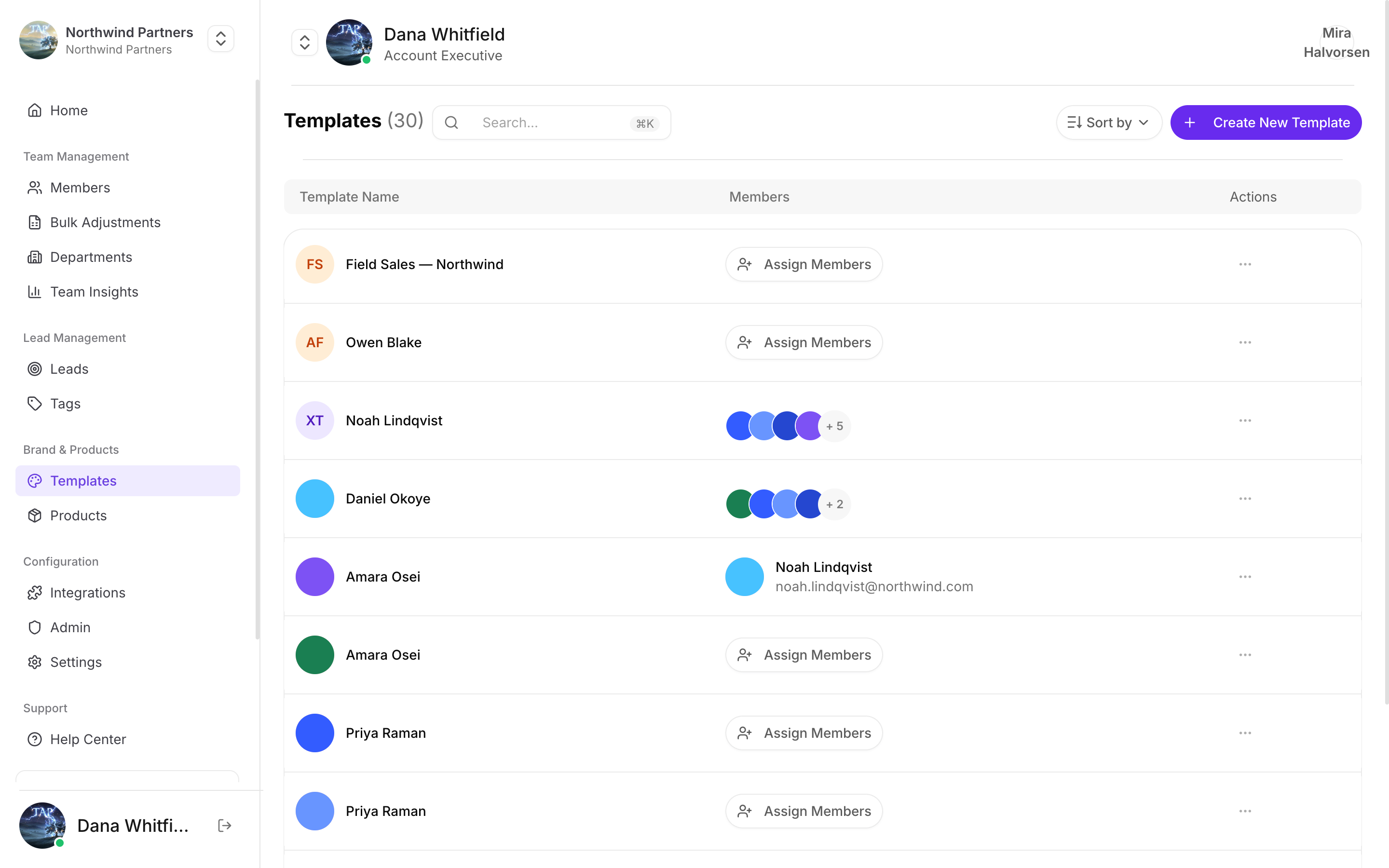
Your published templates
Creating a template
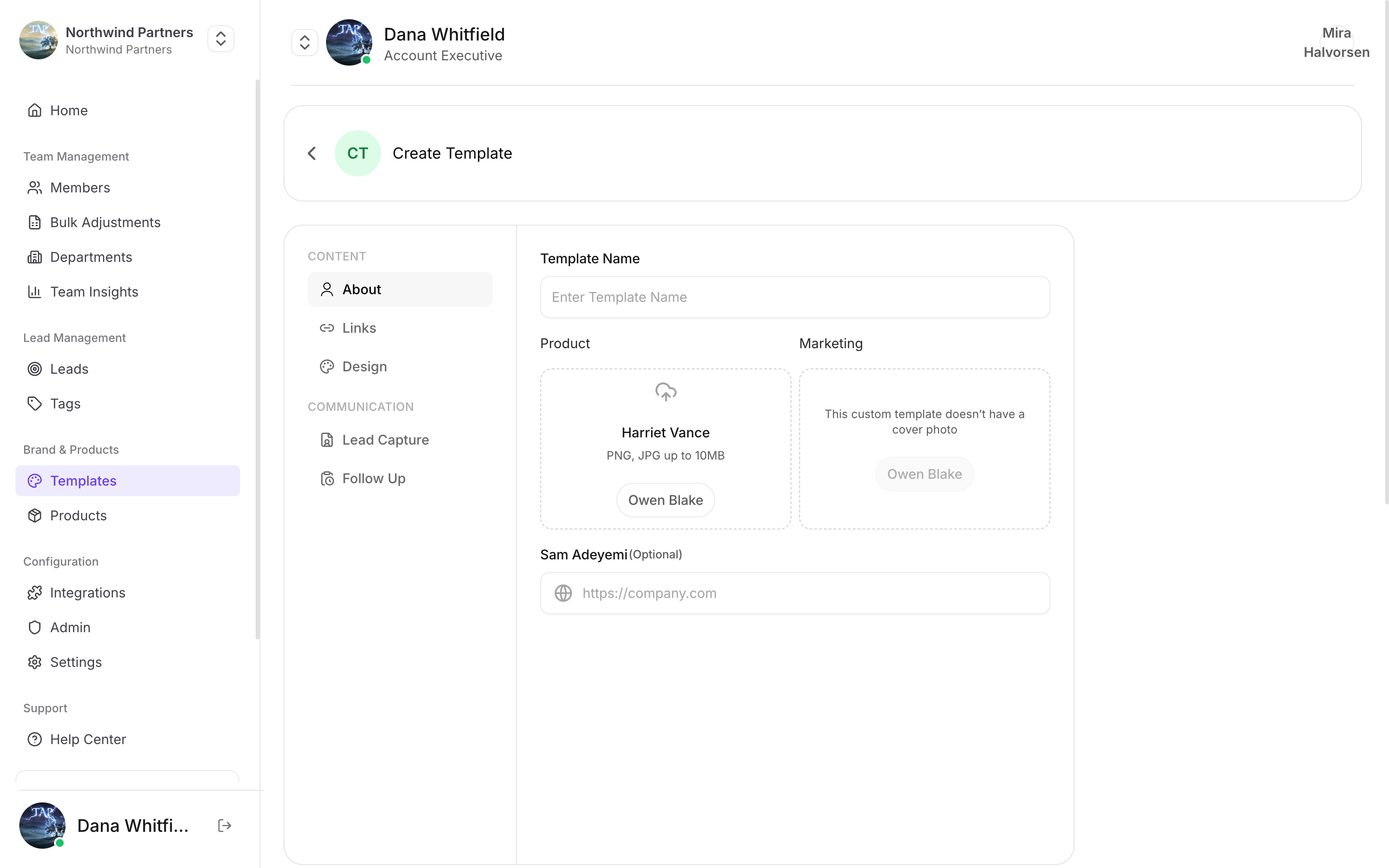
The template builder previews the card as you build it
1
Open the builder
Templates → Create.
2
Set the branding
Logo, cover image, brand colors. This is what makes a profile recognisably yours in the two seconds a visitor looks at it.
3
Add shared links
Links every member should have — company website, careers page, main LinkedIn. Leave personal links out; members add their own.
4
Decide on capture fields
A template can define its own lead capture fields. If it does, those fields override each member’s personal form.
5
Publish
Assign the template to members individually, at import time, or by editing existing members.
What members can still change
Templates and department permissions work together and it’s worth being clear about the division:- The template sets what a profile starts as.
- The department sets what a member may change afterwards.
If you want a field to be identical across the team and stay that way, you need both: set it in the template and lock it in the department. Template alone only sets the initial value.
Updating a template
Templates → select → Update.Using more than one template
Multiple templates make sense when parts of the business genuinely present differently:By brand
Separate product brands or acquired companies that keep their own identity.
By audience
A sales template with a booking link, a recruiting template pointing at the careers site.
By event
A conference-specific template with event branding, retired afterwards.
By region
Different languages or regional legal text.